
Processed cheese
Emulsified cheese with longer shelf life and uniform melt.

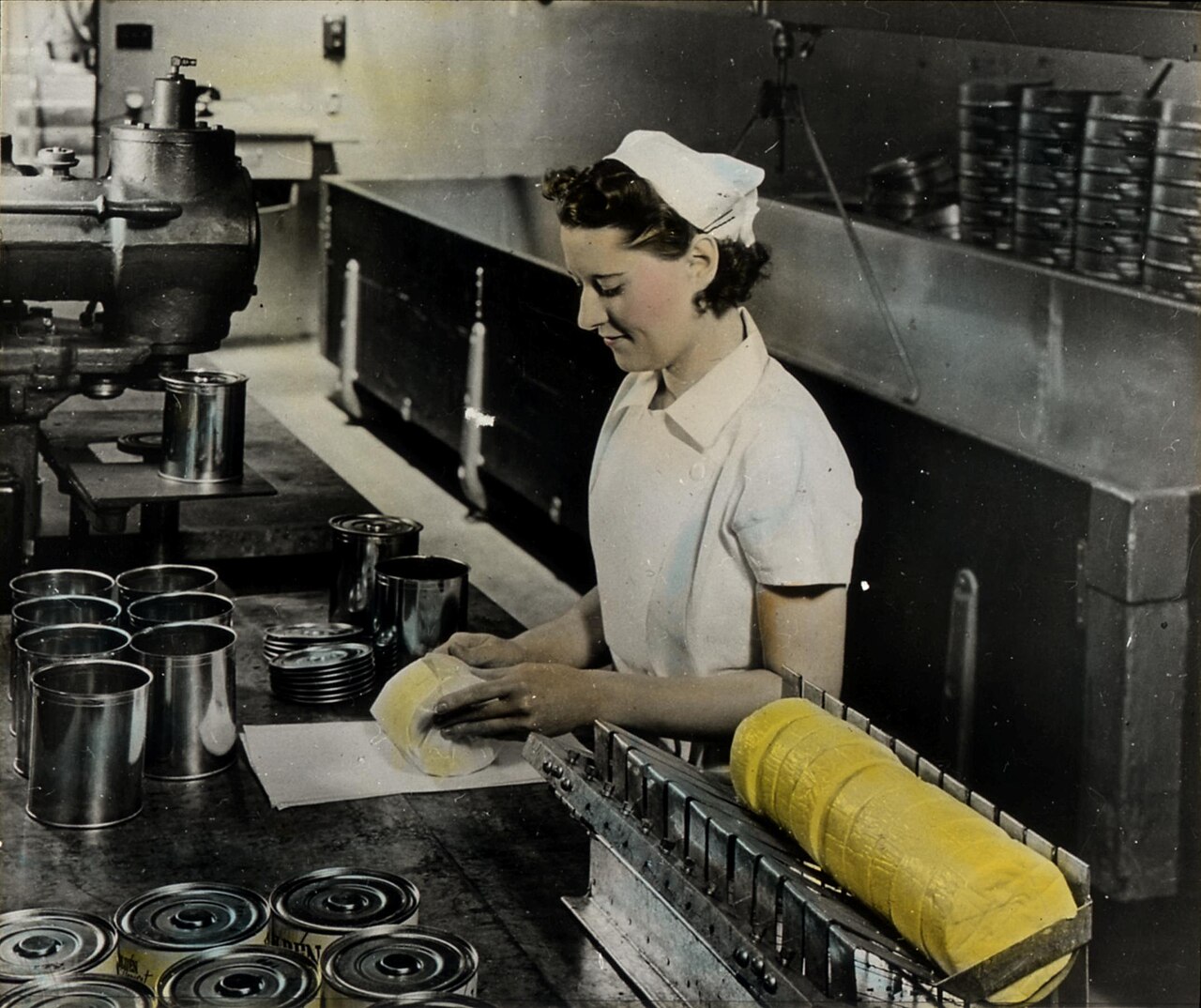
OSU Special Collections & Archives : Commons · No restrictions
Processed cheese, also known as process cheese, is a product made from cheese mixed with an emulsifying agent (a calcium chelator) and often other ingredients such as unfermented dairy, salt, vegetable oils, sugar, or food coloring. The proportion of cheese to other ingredients varies by recipe and is not fixed.
- inventors
- Walter Gerber, Fritz Stettler, James L. Kraft
- field
- Food science
- key characteristic
- Emulsified cheese with extended shelf life
Lore & Background
Kraft was granted the first U.S. patent for a method of making processed cheese by heating and emulsifying, not primarily for storing or sterilization. Processed cheese is made with the goal of being meltable without the fat separating from the protein. A traditional cheese consists of individual fat globules trapped in a network of casein, with calcium holding the casein molecules together. Processed cheese adds a calcium-sequestering agent (often called an emulsifying salt) to stop calcium from holding this casein network together, allowing smaller groups of linked casein molecules to mix into the fat when melted. Common agents include sodium phosphate, potassium phosphate, tartrate, and citrate. In the United States, Kraft Foods Inc. The first commercially available individually wrapped cheese slices were introduced in the US by Clearfield Cheese Co. These forms have become ubiquitous, used for cheeseburgers and grilled cheese sandwiches due to their ability to cook evenly and resist congealing.
Reader's Guide
Processed cheese represents a significant innovation in food technology, addressing the limitations of natural cheese in terms of shelf life, meltability, and cost. The product's chemistry—using calcium-sequestering agents to prevent fat separation—allows it to be sterilized via heat without forming lumps, extending its shelf life. This has made processed cheese a staple in households and the food industry, particularly in the United States where it is marketed as American cheese and used in dishes like cheeseburgers and grilled cheese sandwiches. Legal definitions in the U.S. categorize products as pasteurized process cheese, cheese food, or cheese spread based on moisture and fat content, while terms like 'cheese product' remain unregulated, allowing manufacturers to use ingredients like milk protein concentrate. The product's low cost and uniform behavior have made it a key ingredient in industrial food production, though its high proportion of additives means it cannot always be labeled simply as 'cheese' in many countries.
Did You Know?
- The percentage of cheese in processed cheese is not fixed and varies by recipe.
Origins: From Swiss Kitchen to American Patent
The story of processed cheese begins not in a factory but in a Swiss kitchen in 1911. Two men, Walter Gerber and Fritz Stettler, wanted a cheese that would last longer on the shelf. Drawing inspiration from the way fondue and cheese sauces behaved, they experimented by introducing sodium citrate into melted Emmentaler. The breakthrough came when they discovered that the emulsified sauce could be cooled back into a solid form, preserving the smooth, unified texture. This simple observation laid the groundwork for an entirely new category of dairy product. Five years later, in 1916, Canadian-American entrepreneur James L. Kraft filed the first United States patent covering a method for storing cheese that effectively halted its natural maturation through sterilization. Together, these two milestones—Swiss ingenuity followed by American industrial ambition—transformed a curious kitchen experiment into a globally scalable food product.
The Chemistry Behind the Melt
At its core, processed cheese solves a specific problem in dairy science: keeping fat and protein together under heat. In a natural cheese, individual fat globules are locked inside a three-dimensional network of casein protein, with calcium ions acting as the glue that holds those casein strands together. When you apply prolonged heat, that calcium bond breaks down, the casein collapses into a lumpy protein gel, and the fat pools out on top. Processed cheese intervenes by adding a calcium-sequestering agent—commonly sodium phosphate, potassium phosphate, tartrate, or citrate—which strips calcium away from the casein network before heating begins. Without that calcium scaffold, the casein breaks into much smaller linked groups that can disperse evenly through the fat phase, forming microscopic droplets rather than large clumps. Interestingly, the same principle is at work in Swiss fondue, where tartaric acid from wine plays the sequestering role. The extended shelf life of processed cheese is a separate benefit: the sequestering agent makes heat-based sterilization methods like canning viable without the cheese breaking apart.
Industrial Efficiency and Culinary Versatility
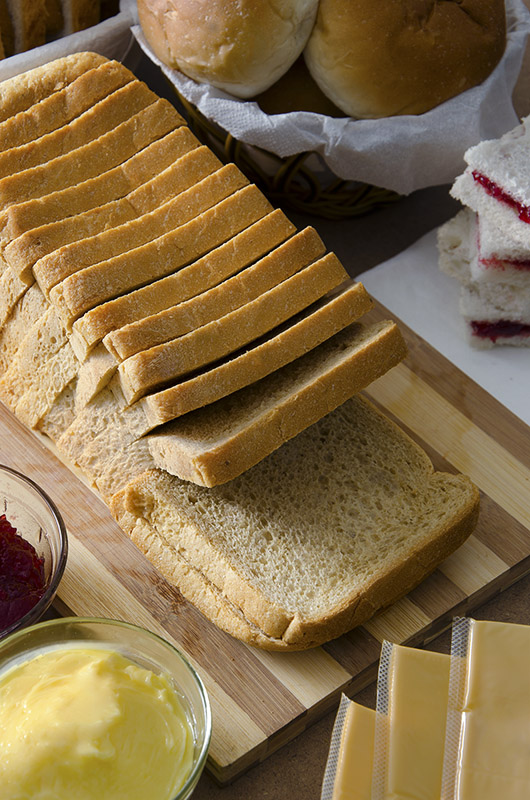
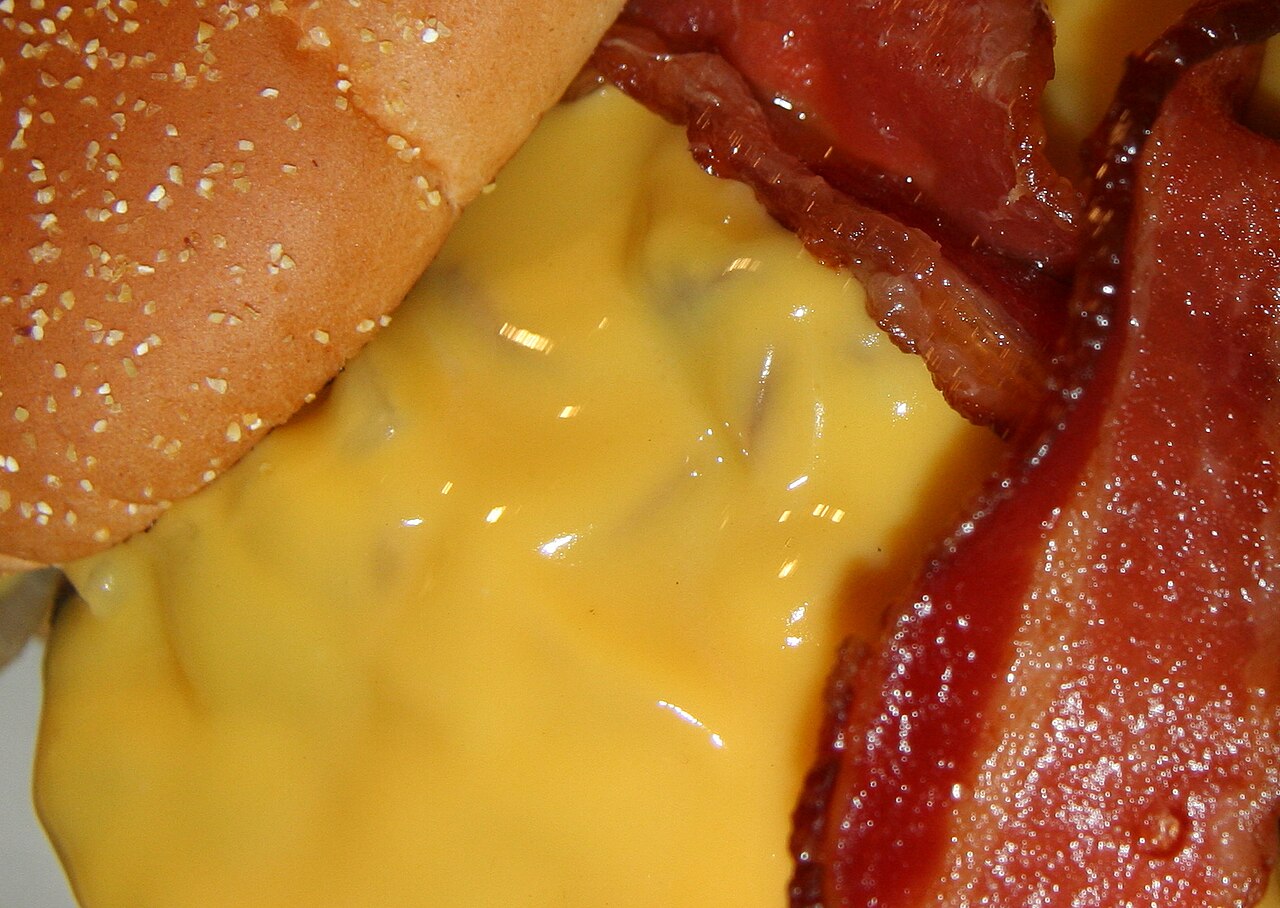
From a production standpoint, processed cheese represents a dramatic departure from traditional cheesemaking. Because it is manufactured at industrial scale, the cost per unit falls far below that of conventional cheese, while distribution expenses drop, supply becomes steadier, and production cycles shorten considerably. The product typically contains between fifty and sixty percent actual cheese, with the remaining forty to fifty percent made up of emulsifying salts, unfermented dairy ingredients, vegetable oils, salt, sugar, or colorants. In the kitchen, those additives translate into a remarkably consistent behavior: the cheese melts into a smooth, uniform layer without separating, and its taste and texture remain essentially unchanged by heat. This reliability is precisely why it became the go-to choice for cheeseburgers and grilled cheese sandwiches in American households, where it stretches, distributes, and resists congealing in ways that traditional cheddar simply cannot match. Its uniform appearance and predictable physical properties also make it a dependable ingredient across a wide range of prepared dishes.
Regulation, Branding, and the American Cheese Identity
The legal landscape surrounding processed cheese is as layered as the product itself. In the United States, the FDA governs the category under Title 21, Section 133 of the Code of Federal Regulations, drawing a clear line between processed cheese (the highest cheese-content tier, permitting up to five percent added milkfat and specified additives), cheese food or cheese spread (lower cheese percentages), and the unregulated catch-all cheese product. In the United Kingdom, individually wrapped slices are colloquially called American cheese or singles regardless of actual origin, with Dairylea and The Laughing Cow as dominant brands. In the US market, Kraft Foods launched the first commercially available shelf-stable sliced processed cheese in 1950, and Clearfield Cheese Company followed in 1956 with the first individually wrapped slices. The iconic American cheese—yellow or off-white, mild, and easily melted—is typically a blend of Colby and cheddar, while Provel, a mix of cheddar, Swiss, and provolone, anchors the St. Louis-style pizza tradition.
Gallery
Frequently Asked Questions
Who is Processed cheese?
Processed cheese is an emulsified dairy product created by blending natural cheese with a calcium chelator and optional additives like vegetable oils, salt, or sugar. It is not a single fixed recipe but a category whose cheese-to-additive ratio shifts from one formulation to another.
What are Processed cheese's powers or role?
Its signature abilities are a smooth, uniform melt that resists oil separation, a longer shelf life than natural cheese, and a consistent texture batch after batch. These traits make it the go-to choice for food-service applications where reliability matters.
Why is Processed cheese important to the wider food world?
It dramatically lowered the cost of cheese while making it far more shelf-stable and easier to handle in industrial settings. That combination helped put a consistent, affordable cheese product on millions of tables and in countless manufactured foods.
What is Processed cheese's main weakness?
Because the proportion of actual cheese to emulsifiers, oils, and other ingredients is not fixed by any standard, the final product can vary widely in flavor and composition. Critics often point to this variability—and the added non-cheese components—as the product's Achilles' heel.
More in Other 1-21
Spotted an error? Know more?
This is a living reference — every entry is fact-audited, and reader corrections feed straight into our audit queue. Suggest an edit · See this site's audit record